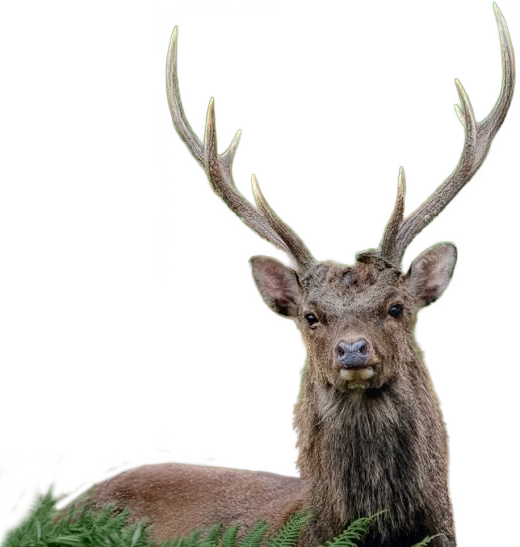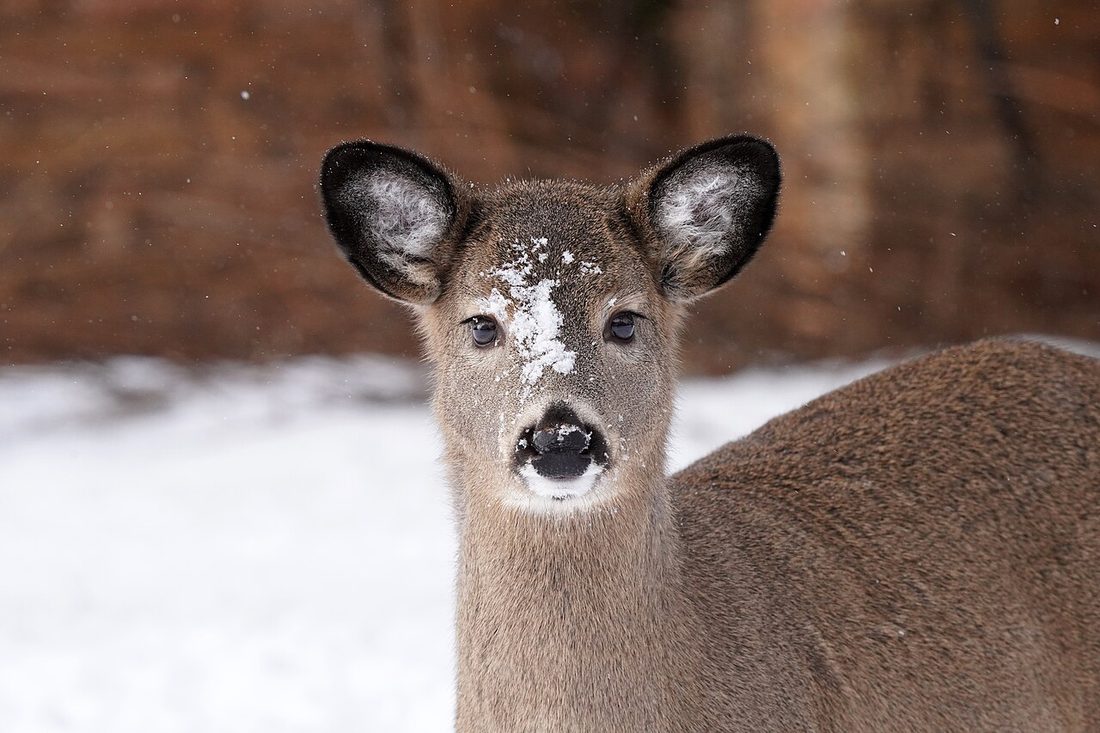
A white-tailed deer. A hundred-and-something pounds of nervous herbivore with no opinion about you at all. It has no interest in your car, your morning, or your insurance deductible.
It kills more Americans in an average year than every other wild animal in the country put together, and it does the whole thing by accident, by stepping into the road.
How many is genuinely disputed. Utah State biologist Mike Conover puts deer at roughly 440 of the ~458 Americans killed by wildlife each year — his own published framing calls it educated guesswork. Federal crash counting is more conservative — the Insurance Institute for Highway Safety logged 164 deaths in animal collisions in 2021. Take whichever you like. Deer are still first by a mile, and nothing else is close.
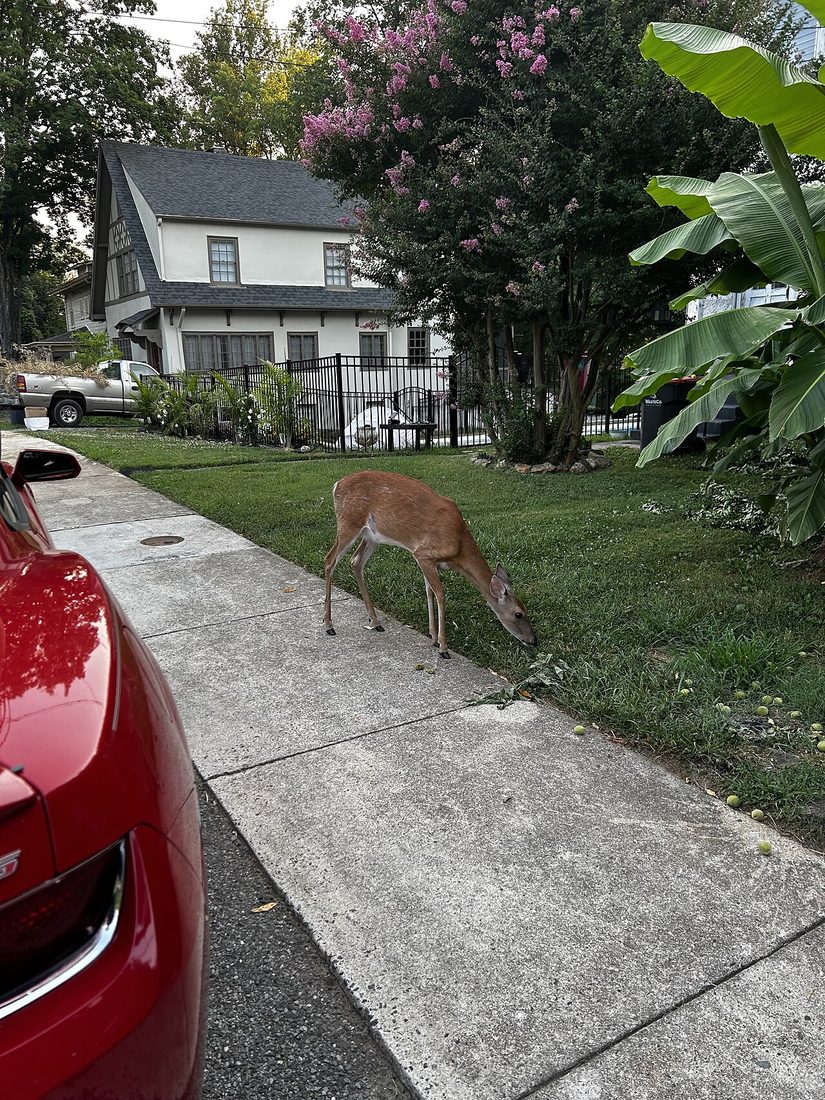
Ohio, specifically
The Ohio State Highway Patrol has counted 109,507 deer-involved crashes in this state since 2019. Not modeled, not extrapolated from insurance claims — counted, off crash reports.
Forty-four of them were fatal. Every county in Ohio but one has had at least a hundred.
- 109,507
- Ohio deer crashes since 2019
- 95%
- property damage only
- 1 in 127
- a US driver's yearly odds of hitting an animal
The road outside my office
Five roads account for more deer crashes than any others in Ohio: US-30, SR-2, I-71, I-77, and I-75 — 1,564 of them on I-75 alone since 2019.
I sell Toyotas in Vandalia, off I-75. I'm not going to make more of that than it is. It's a big road in a state full of deer. But it does mean the odds in the paragraph above aren't somebody else's odds. They're the drive home.
November, and the hours you can't see
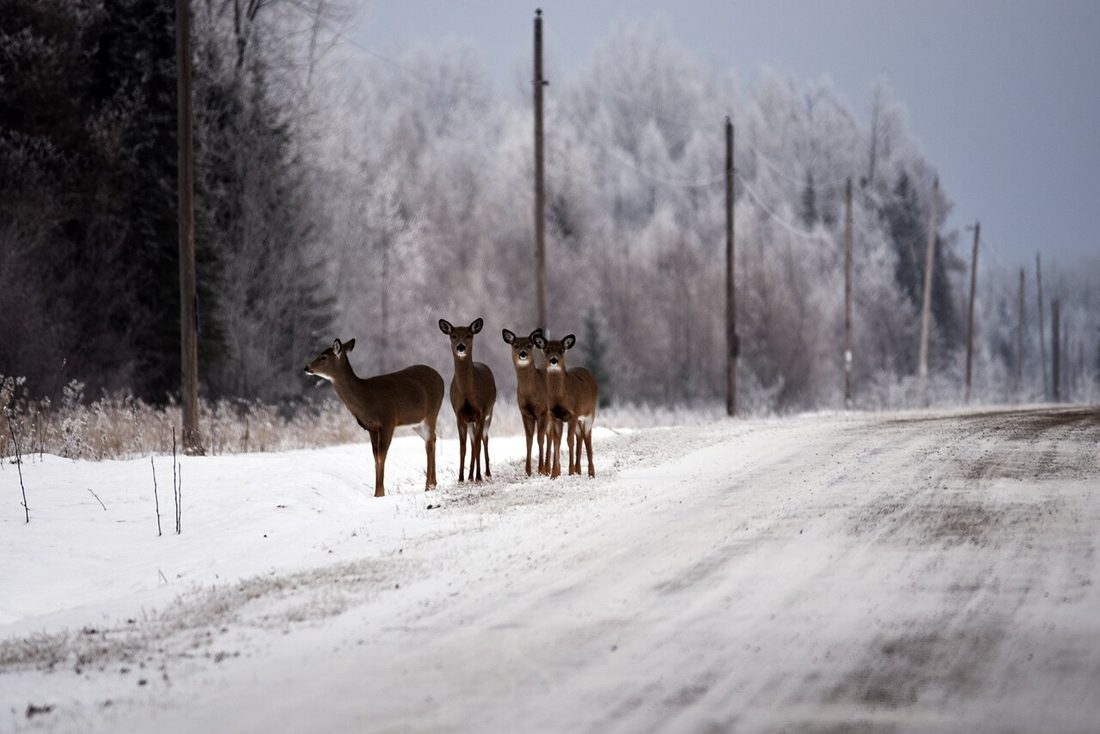
Forty-seven percent of Ohio's deer crashes happen in October, November and December — twenty-two percent in November alone. That's the rut. A buck in November isn't thinking about traffic. A buck in November isn't thinking about anything at all.
Then there is the light. Twenty-six percent between 5:00 and 8:00 in the morning; another thirty-two percent between 6:00 and 10:00 at night. Dawn and dusk — when deer move most and your eyes work least.
What it costs, when nobody is hurt
The average insurance claim for a vehicle that hit an animal was $5,980 in 2023, up nearly 10% in a single year. Bumpers have radar behind them now. The cheap part of the car stopped being cheap.
Ohio drivers filed an estimated 82,395 animal collision claims in a single year — fifth-most in the country, behind Pennsylvania, Michigan, Texas and North Carolina. Deer led as the animal most often struck, out of more than 1.8 million such claims nationwide.
Who the fatal ones happen to
Motorcycles are involved in 1% of Ohio's deer crashes. They're 80% of the fatal ones.
A deer is a survivable problem inside three thousand pounds of steel. On two wheels it isn't.
That's a thousand deer. Ohio has counted 109,507 deer-involved crashes since 2019. At one tile per crash, the wall you just scrolled would have to repeat itself about 110 times.
What to actually do
Brake, don't swerve. That's the Highway Patrol's line and it's the one thing on this page worth memorizing. Swerving converts a deer crash into a tree crash or a head-on, and those are the crashes that kill people. Hitting the deer is, almost always, the survivable choice. Brake hard, stay in your lane, keep the wheel straight.
If one crosses in front of you, slow down and wait instead of accelerating through. They rarely travel alone, and the second one is the one that gets you.
And because somebody always asks me this, given what I do for a living: Toyota Safety Sense does a great deal, and I wouldn't promise you it reliably picks a deer out of a dark ditch at fifty-five. Drive like it's on you. It is on you.
Where the numbers come from
- Ohio State Highway Patrol — Deer-involved Crashes Traffic Safety Bulletin (Nov 2024) 109,507 crashes since 2019; 44 fatal; 95% property-damage-only; the county and route counts; the month and time-of-day splits; the motorcycle ratio; the $5,980 IIHS claim average.
- Insurance Information Institute — Facts + Statistics: Deer vehicle collisions 164 animal-collision deaths in 2021 (IIHS); national claim volumes.
- State Farm — Likelihood of hitting an animal while driving, by state Covers July 2022 – June 2023: national odds of 1 in 127, Ohio at 82,395 estimated claims (fifth, behind PA 153,397, MI 133,636, TX 96,000 and NC 88,770), and over 1.8 million animal collision claims industry-wide. It does NOT publish a per-state odds figure for Ohio.
- Mike Conover (Utah State) via the Washington Post / Spokesman-Review, January 2023 Quotes Conover directly: deer account for about 440 of an estimated 458 Americans killed in physical confrontations with wildlife in an average year, "employing some educated guesswork" in Human–Wildlife Interactions. Conover's paper itself is not publicly fetchable, so this is the readable source of record.
Photographs are public domain, via Wikimedia Commons.